The Brief
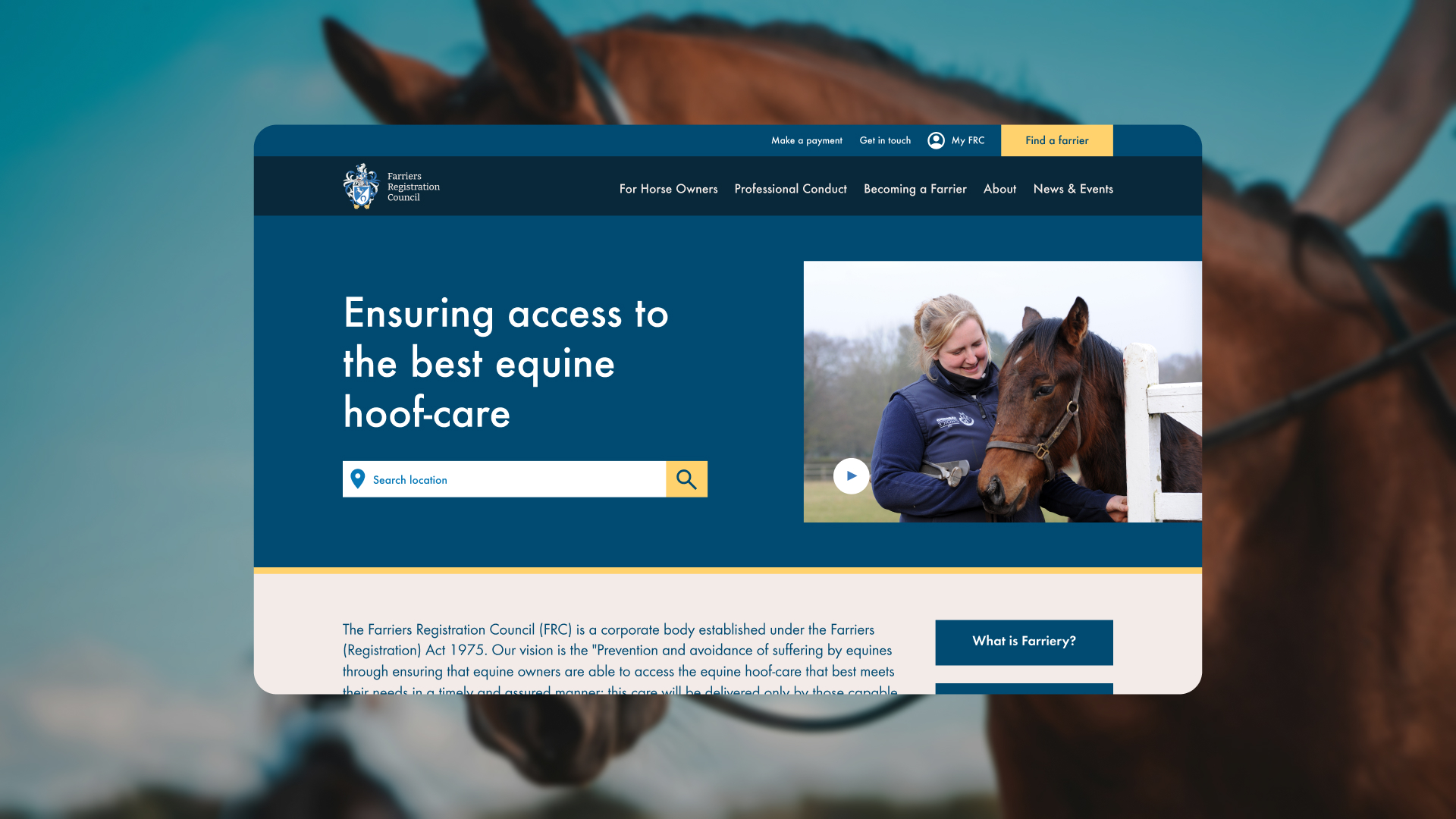
The Farriers Registration Council (FRC) works in collaboration with the Parliament to ensure the safety of the farriery practice. Farriery is the ancient practice of caring for horses' hooves, their health and shoeing where necessary; this is regulated in the United Kingdom by FRC and, in order to conduct this legally you must be registered and approved by this entity.
Receiving hundreds of applications per year, dealing with annual payments and seeking overall improvements on their online platform, FRC was looking for a website refresh as well as new features implemented on the new site.
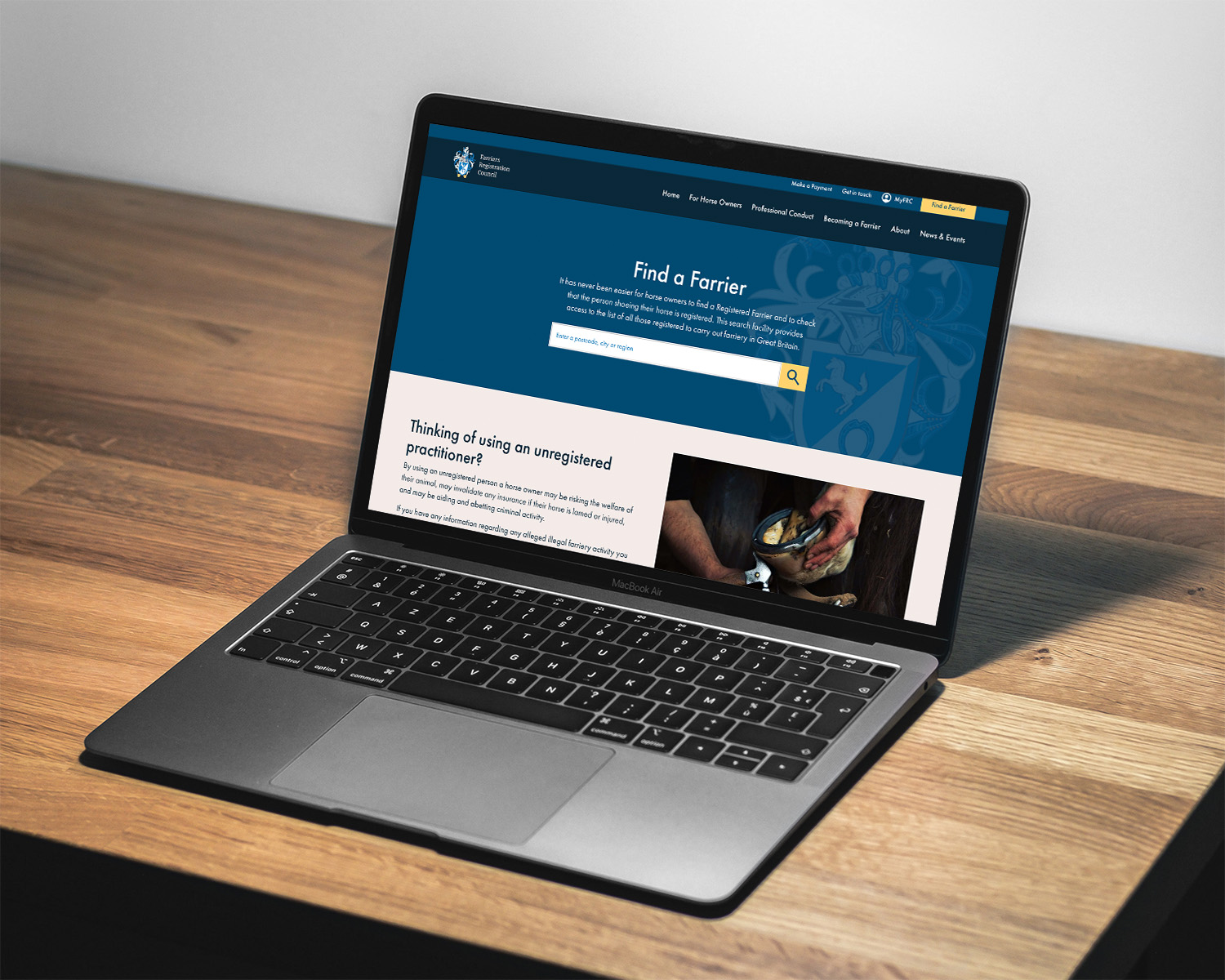
Find a Farrier
The most used functionality on their original site by horse owners, this allows users to find a farrier in their local area. This pulls data across from farriers with a MyFRC user account, but also members without an account that registered offline through the FRC office and physical forms. This allows for flexibility and provides accessibility for a wider range of farriers, with ot without internet access.
Depending on the data available for each farrier, horse owners can contact those by either email, phone or fax. At a glance, the search results also display the highest qualification of the farrier, as well as their proximity to the location inputted.
The Toughest Challenge
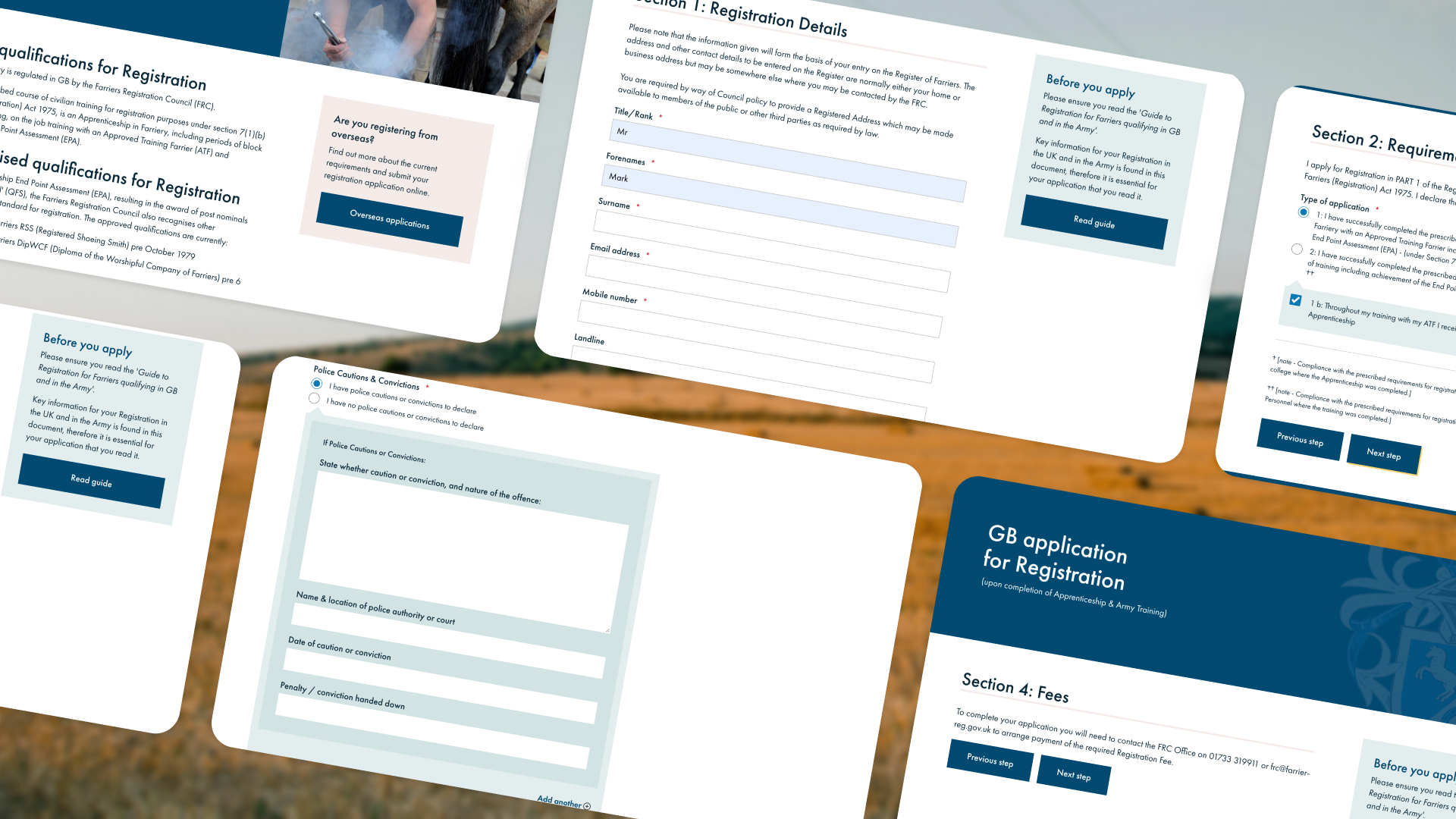
Truly the biggest obstacle we had to defeat was the forms. The Farriers Registration Council relied heavily on paper forms and, due to the amount of applications and enrolments, complaints and enquiries received, the digital aspect and easy sorting became a high-priority feature on the new site. However, there was a lot of logic and strategising needed in order to digitalise those; where a physical form would say 'If X statement applies to you, skip to page 10', this would require a conditional state in the back and front end.
Collaborating with developers and essentially wireframing each form step by step were crucial to this process. The end result was a set of complex forms, divided into multiple steps for a better user experience (using the Gov.uk guidelines for forms' UX).
Final Thoughts
This was one of the toughest projects I've had to work on so far. The complexity of the user profile iwas only the tip of the iceberg; decoding the physical forms and translating those into digital fields was the real brain twister. The team-work has been key in this project and couldn't have cracked it without the help of my line manager, front and back-end developers.

.gif)